
Founding cohort · only 25 spots · 8 weeks
The year-round training system for competitive hockey players
Know What To Train, Get Feedback From Coaches, and Have The Numbers To Prove You're Getting Better
20+ years training NHL athletes · Development to Junior, D1 & Pro
The Problem
You're training. You're just not sure it's working.
You want to make AAA. Or crack a Junior roster. Or stop watching the third period from the bench. So you do what serious players do: you train. You save workouts from Instagram, you piece a plan together, you show up and put in honest work.
And still, on the drive home, there's a question you can't shake. The one every competitive player eventually asks themselves: "Am I actually getting better, or am I just getting tired?"
You're not the only one asking it. These are the exact words we hear from players at your level:
- I train hard but I don't feel like I'm getting better.
- I'm just copying workouts from Instagram.
- I see teammates getting faster and I feel behind.
- I've bought programs before and never finished them.
- I don't know if my form is even right.
- I don't know what to do when this program ends.
- I can't waste another season.
Read those again. Not one of them is about effort. Every single one is about uncertainty: not knowing what to do, whether it's right, or what comes next.
The problem was never your work ethic. It's that nobody ever gave you a system to point it at.
Why It Hasn't Worked
You've probably tried all three of these.
Random workouts from Instagram
They look hard, so they feel productive. But a highlight clip is built to get views, not to develop an athlete. There's no progression, no connection to your season, and no answer for what happens in week five when it stops feeling new. You're collecting exercises, not building a player.
The summer trainer
A good trainer for six weeks in July is genuinely valuable. Then September comes, the sessions end, and you're alone for the eight months of the year when games are actually being played. Development doesn't pause for the season. Your support system shouldn't either.
Buying program after program
You know this one, because you've done it. The program is good. You start strong. Then a form question goes unanswered, a week gets busy, nobody notices you stopped, and the PDF joins the others in a folder on your phone. A folder of programs is not a plan. It's a collection of good intentions.
Notice the pattern. The workouts were never the missing piece. What's missing is everything around them.
The Difference
Pro players don't have secret workouts. They have an environment.
Tony has trained NHL players for over twenty years. Ask him what actually separates a pro's development from everyone else's and he won't hand you a magic exercise, because there isn't one. A pro's squat looks a lot like your squat.
What a pro has that you don't is the environment:
- A plan for every phase of the year, so there is never a "now what?" moment.
- A coach watching their movement and correcting it before bad habits become permanent.
- Testing that proves the training is working.
- Accountability that makes quietly quitting impossible, because someone is expecting their check-in.
Talent gets you noticed. The environment is what develops you.
The TG Pro Hockey Academy exists to give you that environment: the same structure, coaching eyes, and accountability our pro athletes get, rebuilt online for competitive players at your level, at a price a hockey family can actually sustain year-round.
The System
One system. Four phases. Zero guessing.
Hockey has a calendar. Your training should follow it. Inside the Academy, the entire year is mapped, and you always know exactly where you are on it.
You are here
In-Season Performance
October – March
Stay fast and strong through the whole schedule. Heavy work farther from the game, light work closer, the week built backwards from puck drop.
Post-Season Testing & Reset
April
Measure the year, recover properly, and set the targets for the build ahead.
Off-Season Build
May – August
Muscle, strength, power, movement quality. The foundation everything else is built on, and you are already inside when it opens.
Pre-Season Prep
August – September
Convert summer strength into speed and conditioning. Arrive at tryouts sharp, not sore.
Pillar 01
The Year-Round Blueprint
Four training phases mapped to the actual hockey calendar. When one phase ends, the next one is already waiting. The question that kills most players' development, "what do I do now?", simply stops existing.
You always know what to train, when to train it, and why.
Pillar 02
The Complete Curriculum
Every TG Athletics program is included as your curriculum: the Off-Season Program, In-Season Program, Speed Program, Explosive Power Program, and the Mobility Program, plus every program we release while you're a member. These aren't bonuses thrown in to pad an offer. They're the phases of your development, in order.
The same protocols our pro athletes train on, sequenced for your season.
Pillar 03
Coaching Eyes on Your Work
Film your working sets and post them for a form check. Tony's coaching team reviews your mechanics and tells you specifically what to fix, within 48 hours. Stuck on anything else, from a loading question to how to train around a heavy game week, you ask in the room and Tony or one of his trainers answers, within 24 hours on weekdays. Plus four live calls with Tony across the eight weeks, recorded if you miss one. This is the piece no PDF can ever give you: someone who actually watches you train.
You stop wondering if you're doing it right. You know.
Pillar 04
Accountability & Proof
Weekly check-ins that notice when you go quiet. And once a month, testing week: sprint, jump, and strength standards, measured and logged. Your progress stops being a feeling and becomes a number you can watch climb.
You'll know you're getting faster because the data will say so.
The Rhythm
A week inside the Academy
Structure only works if it shows up every week. Here's what being led actually looks like.
Monday
The Game Plan
The week's focus drops. You know exactly what's expected before your first session.
All Week
Train Your Phase
Execute the sessions mapped to your point on the calendar. No improvising, no guessing.
Wednesday
Form Checks
Upload your videos. Coaches review your mechanics and tell you what to correct.
Friday
Wins Thread
Post your week's work. Someone is expecting it, which is exactly why you'll do it.
Monthly
Testing Week
Sprint, jump, and strength standards. Prove the month made you better.
March
There are two versions of your March.
March, Version 1
The season took it out of you. Somewhere around January the legs went heavy, the first step got slower, and the shifts got shorter. Nobody said anything. You tell yourself you'll fix it in the summer, which is what you told yourself last summer.
March, Version 2
You're still fast in the third period of a Sunday game. Your testing numbers went up during the season instead of down. And when the off-season opens in April, you're not starting over from scratch. You're already inside the system, moving into the next phase.
Same schedule. Same games. Two very different players by playoffs.
Here's the honest part: you only get a handful of development years before Junior and college decisions get made. Most players write off the six months they're actually playing, then try to make it all up in ten weeks of summer. That math has never worked. The season is the longest stretch of the year, and it's the one almost nobody trains through properly.
REAL PROS WITH REAL RESULTS
The Coach
Built by the coach the pros trust.
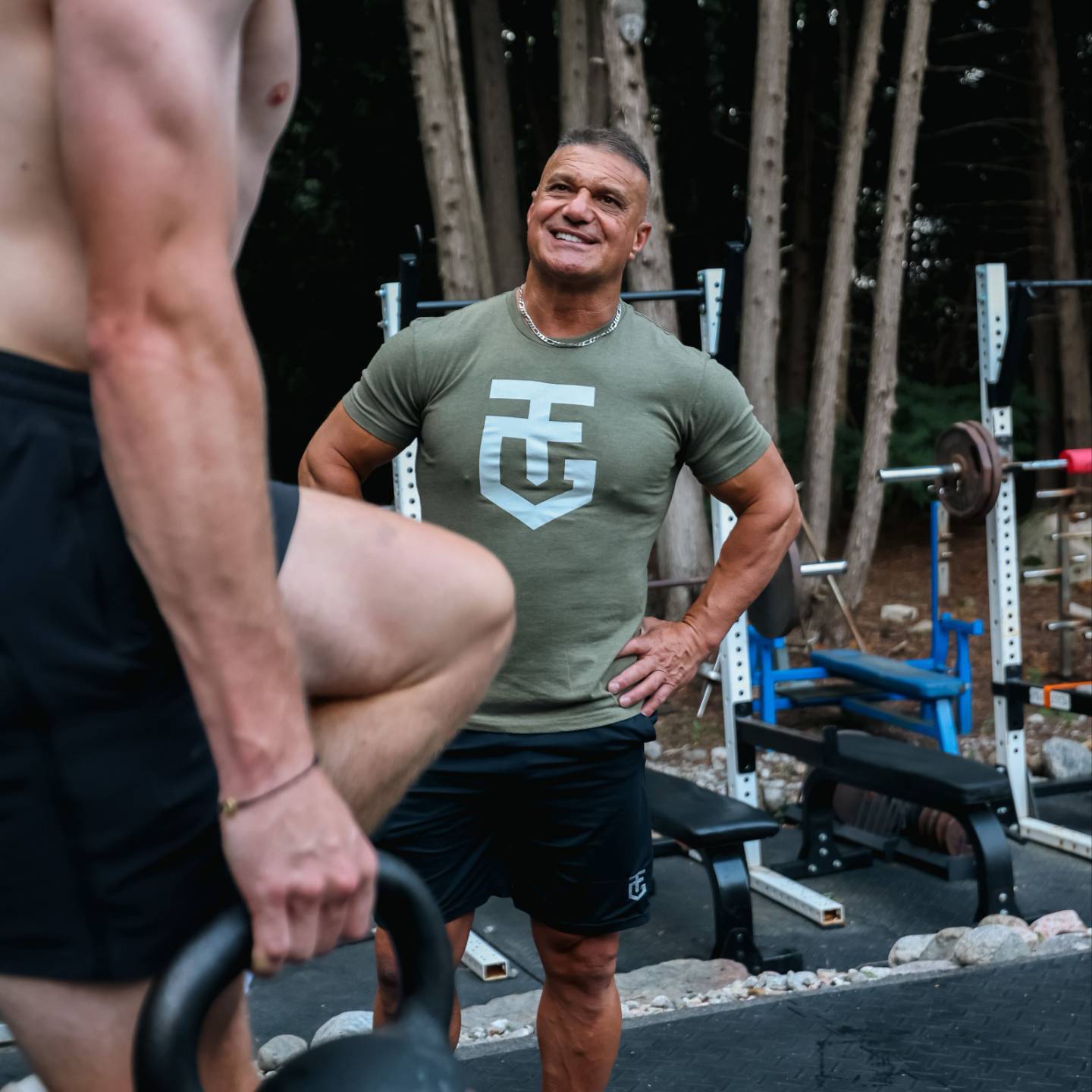
Tony has spent more than twenty years developing elite athletes, including NHL professionals and players who made the jump to Major Junior and D1 college hockey. He's watched thousands of players train, and he'll tell you the same thing every time: the players who make it aren't the ones with the fanciest workouts. They're the ones who trained inside a system, all year, with someone holding them to it. The Academy is that system.
Measured, not promised. We don't deal in hype here. We deal in monthly testing numbers. You'll know the training is working because your own data will prove it.
"Tony took me to a level I didn't realize I had."
Ben Hutton · NHL
5 First-Round Draft Picks
First-round NHL draft picks developed in the last nine years.
20+ Years
Developing pro, Junior and D1 athletes out of one gym.
For Parents
The part written for you.
You already invest more in this sport than most people realize: ice time, equipment, travel, private coaching. Before you add anything to that list, here's what you should know.
Professionally coached and supervised. Tony and his coaching team run all training and feedback. Every form check and coaching interaction happens in public channels, visible to the whole community, never in private messages.
Structured and age-appropriate. Your athlete follows a set weekly schedule built for their phase of the season, with movement quality and safe mechanics checked before load ever goes up.
The math. A single private training session runs $100 to $200 and covers one hour. This is $147 for eight weeks of programming, professional form review, weekly accountability, and testing. About $18 a week.
What happens after eight weeks. Your athlete continues at the founding rate of $197 every 12 weeks unless you cancel, and we'll email you before the first charge. You can cancel any time from your account.
Full visibility. Your email is on the account, so you see every receipt and everything your athlete has access to.
The Offer
only 25 founding spots.
We're opening the Academy with 25 players for eight weeks before it goes public. $147 gets you the eight weeks, and a founding rate that stays yours for as long as you stay.
25 seats · closes when full
FOUNDING COHORT - 8 WEEKS
$147 USD
8 weeks for $147 · founding rate locked after
Join Today and Save $100What "founding" actually means here. You are the first 25 people inside. Some of it will be rough, and some of what gets built next gets built because you asked for it. In exchange and as a thank you, you pay less than everyone who comes after you, for as long as you stay, and you get more of Tony's attention than any group will get again.
The guarantee. Do the eight weeks. Follow your phase, post your check-ins, do the testing. If you're not satisfied with your progress, we refund you in full. We can be this direct about it because the players who do the work get stronger, faster, and more explosive.
Parents: your email is on the account, so you see every receipt. You pay $147 today for the eight weeks. After that it continues automatically at the founding rate of $197 every 12 weeks unless you cancel, and we'll email you before the first charge. Cancel any time from your account.
OUR REVIEWS
TAKE A LOOK AT WHAT OUR ATHLETES ARE SAYING
Questions
Everything you'd ask us anyway.
What exactly am I paying for?
Are the programs inside when I join?
The season already started. Isn't it too late?
What equipment do I need?
What ages and levels is this for?
How do form checks work?
Is this one-on-one coaching?
I already bought a TG Athletics program. How is this different?
Is it safe for younger athletes?
The Decision
Every player on your team will finish this season. Few will finish it faster than they started.
You get a handful of development years before the decisions that matter get made, and one of them is running right now, six months long, while most players train around it instead of through it.
Take one of the 25 founding seats and get to Christmas knowing exactly what you built.
Join Today and Save $100